

What are the common problems with S64315?
Leave a message

What are the common problems with S64315?
As a supplier of S64315, I've had the privilege of working closely with researchers and professionals in various fields. Through this experience, I've come to understand the common challenges and questions that arise when dealing with S64315. In this blog post, I'll delve into these issues, providing insights and solutions based on my real - world knowledge.
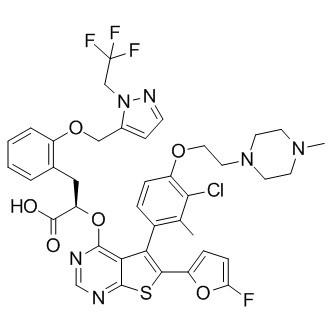
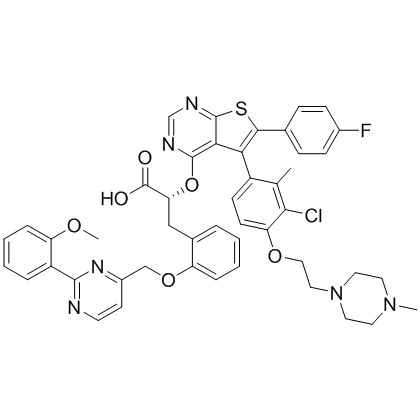
S64315 is a potent and selective MCL - 1 inhibitor that has shown significant potential in the field of cancer research [1]. It functions by binding to the BH3 - binding groove of MCL - 1, a protein that plays a crucial role in apoptosis regulation. By inhibiting MCL - 1, S64315 can induce apoptosis in cancer cells, making it a promising candidate for cancer treatment.
One of the most common problems encountered with S64315 is solubility. S64315 has relatively poor solubility in aqueous solutions, which can pose challenges during experimental setup. This low solubility may lead to issues such as inaccurate dosing, precipitation during storage or in cell culture media, and non - uniform distribution in the experimental system. To address this, it is often recommended to use organic solvents such as DMSO (dimethyl sulfoxide) as a co - solvent. However, DMSO can have cytotoxic effects on cells at high concentrations, which means that careful titration is required to ensure that the DMSO concentration in the experimental system is within a non - toxic range.
Another issue is stability. S64315 can be sensitive to environmental factors such as light, temperature, and pH. Exposure to light for extended periods can lead to degradation of the compound. Similarly, high temperatures can accelerate the decomposition process. Therefore, proper storage conditions are essential. S64315 should be stored at low temperatures, preferably at - 20°C or lower, in a light - protected environment. Additionally, the pH of the storage solution can also affect its stability. Maintaining the appropriate pH range as recommended in the product specifications is crucial to prevent degradation.
When it comes to biological activity, one of the challenges is off - target effects. Although S64315 is designed to be a selective MCL - 1 inhibitor, there is always a possibility of it interacting with other proteins in the cell. These off - target interactions can lead to confounding results in experiments and may also contribute to potential side effects in in vivo studies. To mitigate this, extensive pre - clinical testing and the use of appropriate controls are necessary. For example, using other selective inhibitors such as MIK665 CAS No.: 1799631 - 75 - 6, S63845 CAS No.:1799633 - 27 - 4 or FSEN1 CAS No.: 862808 - 01 - 3 in parallel experiments can help in distinguishing the specific effects of S64315 from non - specific actions.
In terms of formulation, the choice of formulation can also impact the performance of S64315. Different formulations may have different bioavailability and pharmacokinetic properties. For in vivo studies, the formulation needs to be carefully selected to ensure that S64315 can reach the target tissues at an effective concentration. This may involve considerations such as the route of administration (e.g., intravenous, oral, or intraperitoneal), the vehicle used, and the presence of any excipients.
Furthermore, the reproducibility of results can be a problem. Variations in experimental conditions such as cell lines, culture media, and handling techniques can lead to inconsistent results when using S64315. It is important to standardize the experimental protocols as much as possible. Using well - characterized cell lines, maintaining consistent culture conditions, and following strict experimental procedures can help improve the reproducibility of results.
In addition, regulatory compliance can be a hurdle when working with S64315. As a research compound, it is subject to various regulations depending on the country and the intended use. Ensuring that all regulatory requirements are met is crucial to avoid any legal issues or delays in the research process. This may involve obtaining the necessary permits, following proper safety protocols, and keeping accurate records of the handling and use of S64315.
Overall, while S64315 holds great promise in cancer research and potentially other areas, it is important for researchers to be aware of these common problems. By understanding and addressing these issues, we can maximize the potential of S64315 and obtain more reliable and meaningful results.
If you are facing any of these challenges or have any questions about S64315, please feel free to reach out to discuss your specific needs. We are here to provide you with high - quality S64315 and support you in your research journey. Whether you are conducting in vitro studies or in vivo trials, our team is dedicated to helping you achieve your research goals. Don't hesitate to contact us for further information and to start a procurement discussion.
References
- Chen S, Kang YJ, Fischer KM, et al. Orally available MCL - 1 inhibitor S64315 shows pre - clinical in vivo efficacy in hematological and solid tumors. Oncogene. 2018;37(12):1577 - 1588.


