

Suzhou Ureiko Medical Chemistry Technology Co.,Ltd, affiliated to Ureiko Group Co., Limited, is the world's leading supplier of scientific research chemicals and bioactive compounds, is always focus on R&D of signal transduction inhibitors and pharmaceutical intermediates. The product range covers a variety of inhibitors, agonists, and compound libraries. We follow closely the industry trend, and the latest research achievements in life science area.




Why choose us?
Our product
The product range covers a variety of inhibitors, agonists, and compound libraries, more than 10,000 specific inhibitors, agonists, and Libraries of over 100 active compounds
Product application
Ureiko is committed to providing industrial of small pharmaceutical molecules, fine chemicals, agricultural organic fertilizer, new building materials, electronic products, sporting goods, home daily necessities and so on, and become a comprehensive group company.
Production equipment
LCMS, HPLC, PreHPLC, NMR etc.

Achieve genome-wide detection and phasing of genetic and epigenetic variants from a single, standard HiFi library prep with long and accurate reads.
With the power of long-read sequencing, you can achieve:
Epigenetics in every run — no bisulfite treatment required
Unlike methods that require chemical conversion of DNA, HiFi sequencing detects modifications in native DNA through impacts on the kinetics of base incorporation.
High accuracy of sequence and methylation
Methylation detection with HiFi sequencing is highly concordant to bisulfite sequencing.
Access the full genome
Access difficult regions of the genome like repeats and centromeres that are beyond the reach of short-read sequencing.
Phasing
Identify allele-specific methylation, whether due to parental imprinting, genetic variation, or repeat expansions.
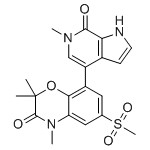
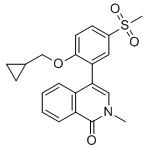
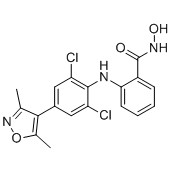
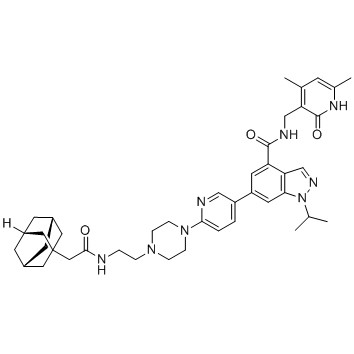
●No PAINS or toxic substances/unwanted functions: Filtered by strict ‘Ro5-like’ physicochemical and most stringent in-house structural filters
●Unique small molecule regulators with biological activity for epigenetic studies and related assays
●The library contains epigenetics-related compounds targeting HDAC, histone demethylases, histone acetyltransferases (HAT), DNA methyltransferases (DNMT), epigenetic reader domains, microRNAs, etc
●Valuable tool for epigenetic target identification in chemogenomics, pharmacogenomics and other biological applications
●Bioactivity and safety confirmed by preclinical studies and clinical trials
●Structural diversity, medicinal activity, and cellular penetration
●Structural document, IC50, and other chemical and biological data are provided
●All compounds are continually updated
●All of these compounds with Tanimoto index ≥ 0.85
●Compound cherry-picking service is provided
Types of Epigenetic Changes
Firstly, it’s important to remember that epigenetic changes are reversible and do not change the sequence of DNA bases. Instead, they change how your body reads a DNA sequence. Some epigenetic changes remain in place as genetic information passes down through generations. This is known as epigenetic inheritance.
Three classes of epigenetic regulation exist.
DNA methylation is when small chemical groups called methyl groups attach to DNA. When methyl groups form on a gene, the gene is silenced and doesn’t produce any protein. Methyl groups are highly stable (only between 10-20% on average vary over time) and although they have low reactivity, they still have a significant influence on cellular function.
DNA methylation occurs at the C5 position of the cytosine to form 5-methylcytosine. This happens during gametogenesis and after fertilisation. After each cell division, methylation markers are maintained by the DNA methyltransferases DNMT1, DNMT3A and DNMT3B. It can be influenced by environmental factors such as diet, hormones, stress, drugs or exposure to environmental chemicals. If DNA becomes unmethylated, the barrier to gene activation is removed and it can be ‘switched on’.
DNA methylation has both positive and negative effects on human health, depending on exactly which genes become methylated. For example, the BRCA1 and BRCA2 genes can protect against certain cancers (and are best known for their link to breast cancer). However, when these genes become methylated, their function is restricted and someone with methylated BRCA1 and BRCA2 genes is at increased risk of developing breast cancer.
Studies show that healthy methylation patterns are linked with normal human development, while irregular patterns can lead to epigenetic dysfunction, increasing the risk of neurodevelopmental disorders.
Another type of epigenetic modification, DNA hydroxymethylation helps to ensure genomic stability. It is closely linked with the demethylation process, and although it has previously been considered as simply an intermediate step on the pathway to demethylation, recent evidence shows that hydroxymethylation has its own important and distinct biological role. Methylation typically represses gene activity, while hydroxymethylation is more closely associated with active gene expression and DNA repair.
Chromosomes are found in the nucleus of the majority of cell types within our body and are made up of DNA that is tightly coiled around proteins. These proteins are called histones, and they give chromosomes a more compact shape. Changes to histones will determine how tightly or loosely DNA will wrap itself around them, and this will directly affect cell behaviour. Research states that there are at least nine different types of histone modification. Three of the most frequently occurring include:
Acetylation
This occurs when an acetyl group attaches to an amino acid residue of a histone, specifically lysine or arginine. Histone acetylation facilitates gene transcription – where an RNA copy of a DNA sequence is made, triggering the process of gene expression.
Deacetylation is the process of silencing the gene and is the removal of acetylation groups from histones.
Methylation
Unlike acetylation, which only occurs in histones, methylation can occur in DNA and histones. When methyl groups attach to a histone, it will either trigger activation or silencing depending primarily on the location of the residues.
Phosphorylation
This refers to the addition of a phosphate group to a histone and mostly occurs in the serine or glycine residues. Histone phosphorylation is generally thought to activate transcription. The primary role of this process is to support gene regulation, but phosphorylation can also help repair damaged DNA.
For all histone modifications, there are processes through which chemical groups are either added or removed from the histones. They are sometimes known as ‘writers’ and ‘erasers’. Writers are enzymes that add chemical groups to histones, while erasers remove them.
RNA, or ribonucleic acid, works closely with DNA to ensure that cells grow and function properly. While DNA contains all of the instructions that cells need, RNA is responsible for following these instructions, which it does by copying genetic code to produce the necessary proteins. A non-coding RNA is a functional RNA molecule that is not used as a template for making proteins. Instead, RNA molecules have other important functions in action such as regulating gene expression. They play a role in controlling which genes are activated or silenced, as well as in the structure of chromosomes.
RNA strands can also be modified through the process of methylation. When a methyl group is added to an RNA molecule, the original instructions don’t change, but it does become easier for cells to understand them and what they need to do. Methylation can control factors such as how long the RNA lasts before it gets broken down, and how much protein is made. Essentially this is an added layer of control in regulating gene activity to support normal development and protect our bodies from disease.

Messenger RNA (mRNA) is responsible for transporting genetic instruction from DNA to the protein-making mechanisms stored within cells. mRNA is created through transcription – a process by which a cell creates a messenger molecule from a DNA template. During transcription, RNA polymerase reads the DNA sequence of a gene and synthesises a complementary mRNA module. This carries the genetic information from the DNA found in the cell’s nucleus to the ribosomes in the cytoplasm, where it acts as a template for protein synthesis.
MicroRNAs (miRNAs) are a group of non-coding RNAs that play a key role in RNA silencing and gene expression. By binding to mRNAs, microRNAs can block the mRNA from being transformed into a protein or target it for cell degradation, influencing the level of certain proteins within the cell and ensuring that the right number of proteins are made, regulating normal gene function and helping to prevent disease.
Physicochemical Properties
|
M.Wt |
498.58 |
|
|
Formula |
C28H30N6O3 |
|
|
CAS No. |
2101957-05-3 |
|
|
Appearance |
Solid |
|
|
Storage |
Solide Powder -20 °C 3years; 4°C 2years |
In Solvent -80°C 6 Months -20°C 1 Months |
Certificate

FAQ
As one of the most professional epigenetics library enterprises in China, we're featured by small molecules chemicals and inhibitors. Please rest assured to buy custom made epigenetics library from our factory. For OEM service, contact us now.