

Suzhou Ureiko Medical Chemistry Technology Co.,Ltd, affiliated to Ureiko Group Co., Limited, is the world's leading supplier of scientific research chemicals and bioactive compounds, is always focus on R&D of signal transduction inhibitors and pharmaceutical intermediates. The product range covers a variety of inhibitors, agonists, and compound libraries. We follow closely the industry trend, and the latest research achievements in life science area.


Why choose us?
Our product
The product range covers a variety of inhibitors, agonists, and compound libraries, more than 10,000 specific inhibitors, agonists, and Libraries of over 100 active compounds
Product application
Ureiko is committed to providing industrial of small pharmaceutical molecules, fine chemicals, agricultural organic fertilizer, new building materials, electronic products, sporting goods, home daily necessities and so on, and become a comprehensive group company.
Production equipment
LCMS, HPLC, PreHPLC, NMR etc.
Types of Ion Channels

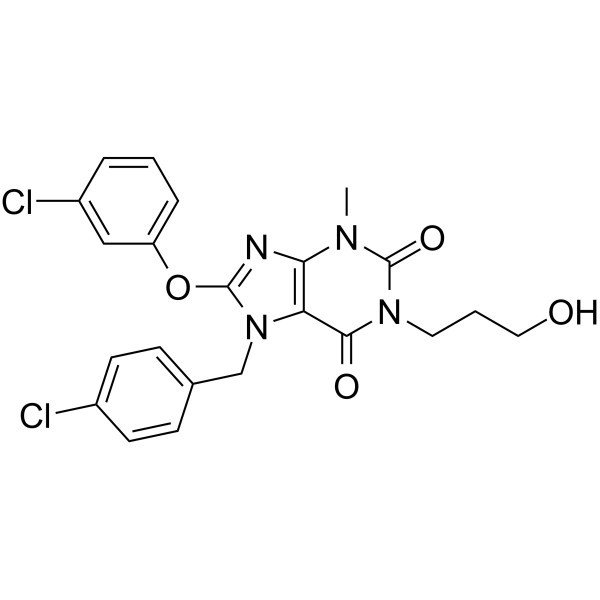
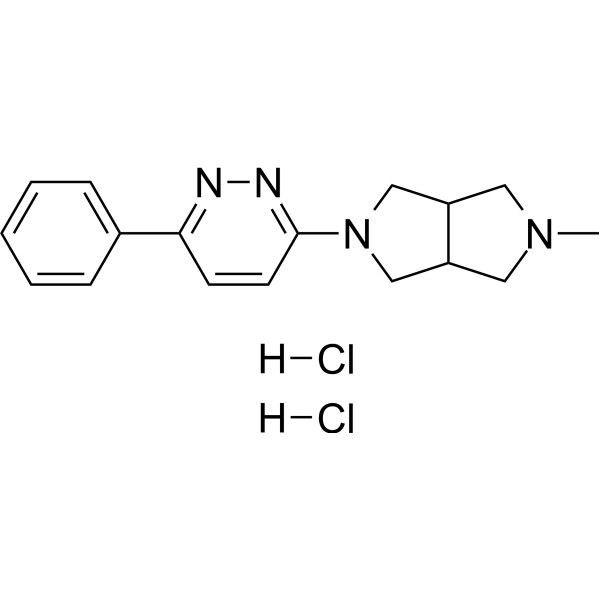

Ligand-gated ion channels
These channels are activated or deactivated by a chemical substance binding to a receptor on the channel. This binding induces the opening or closing of the channel's lumen, thereby altering the permeability of ions. Neurotransmitters released in the synapses from the presynaptic membrane are chemical substances serving as stimuli. Ligand-gated ion channels on the postsynaptic membrane, known as ionotropic receptors, undergo a change in structural configuration upon neurotransmitter binding. This enables the activation or deactivation of ion passage through the channel.
Voltage-gated ion channels
These channels are stimulated by changes in the voltage difference across the cell membrane. This voltage change supplies the channels with the necessary energy to promptly alter their structure, either opening or closing the pore. In many voltage-gated channels, fluctuations in the potential difference can result in both the lumen opening for a few milliseconds and the subsequent closure and inactivation of the channel for a few more milliseconds. Once inactivated, the channel becomes unresponsive to voltage changes, even if the potential difference remains or new voltage stimuli are introduced. The cell membrane of the axon hillock and the whole axon are enriched with abundant voltage-gated ion channels that enable the initiation and propagation of action potentials.
Phosphorylation-gated ion channels
In these channels, the stimulus arises from a mechanism that phosphorylates the channel, providing the energy required to open the pore. This phosphorylation can result from the activation of various mechanisms, including those involving G-proteins or other processes triggered by ligands, voltage changes or mechanical stimuli.
Mechanical-gated ion channels
In this type of channels, the stimulus is a mechanical force that either stretches the cell membrane or affects the cell's cytoskeleton. This mechanical force induces a change in the structure of the channel, leading to the opening of its pore. Sensory receptors in the skin, responsible for the sensations of touch and pressure, utilize mechanical-gated ion channels to convert the energy from a mechanical stimulus into membrane depolarization.
Leakage ion channels
In contrast to the majority of ion channels, which typically remain closed and open only in response to specific stimuli, there are channels that remain constantly open for ion passage while maintaining selectivity for different ions. Among these, the Na+ leakage channels and K+ leakage channels are noteworthy, generating a continuous flow of ions, following their electrochemical gradients. Na+ leakage channels permit the passage of Na+ from the extracellular to the intracellular space, inducing partial depolarization of the cell membrane, particularly significant for initiating action potentials in neurons. Conversely, K+ leakage channels facilitate the flow of K+ towards the extracellular matrix leading to hyperpolarization of the membrane.

Ion channels are located within the membranes of all excitable cells and many intracellular organelles. They are often described as narrow, water-filled tunnels that allow only ions of a certain size and/or charge to pass through. This property is called selective permeability. Prototype channel pores are only one or two atoms wide at their narrowest point and are selective for specific kinds of ions (e.g., sodium or potassium). However, some channels may be permeable to more than one type of ion, usually sharing a common charge: positive (cation) or negative (anion). Ions usually pass through channel pore segments as individual files almost as fast as they pass through free solutions. In many ion channels, the passage through the pore is controlled by a "gate" that can be opened or closed in response to chemical or electrical signals, temperature, or mechanical forces.
Ion Channel Immunogen Preparation Service
We now offer professional service of ion channel preparation as immunogens using following strategies:
Ion channel reconstituted in liposomes
Proteoliposomes are a popular immunogen type and widely applied in many programs. Highly purified ion channel proteins inserted into liposomes can well maintain their native structure and activities. Proteoliposomes can be prepared from either cell-based expression or cell-free expression systems. With the aid of our Lipid Screening Platform, we will perform comprehensive condition screening to find the optimal lipid components.
Ion channel reconstituted in nanodiscs
Nanodiscs make it possible to fix the transmembrane region of ion channels in a native-like phospholipid bilayer environment. It offers a convenient reconstitution format not only highly mimics the natural plasma membrane, but also very flexible in terms of size and composition. Besides, in comparison to liposomes or micelles, ion channel nanodiscs are also more stable. As immunogens, nanodiscs can ensure minimal immune response against the transmembrane region, thus raise more homogeneous antibodies targeting excellular/intracellular domains. ased expression and cell-free expression systems.
Ion channel reconstituted in polymers
Polymers emerge as a novel approach for ion channel reconstitution in recent years. Unlike detergent, it does not have to disrupt the native lipid environment around the target protein; instead, it can directly isolate and solubilize membrane-lipid complex. This detergent-free method could prepare immunogen with maximally preserved structure and activities.
Ion channel-displaying VLPs
In this approach, cells are co-transfected with vectors encoding target ion channels and viral core proteins (e.g. Gag). After budding off from host cells, the viral core will capture plasma membrane fractions enriched with the target protein. The VLPs displaying the target can then be used for a wide variety of applications, such as animal immunization, antibody screening, drug delivery, assay development, etc.
Peptide/protein surrogate antigen
Peptide/protein derived from extracellular/intracellular domains is also a common-used format for integral membrane proteins, particularly for ion channels. Since they commonly have large extracellular/intracellular loops or regions. To our knowledge, the extracellular and intracellular loops are the primary functional regions and play key roles in interacting with ligands or substrates.
Ion channel overexpressing stable cells
Apart from all the complicated preparation procedures for recombinant ion channels, another strategy is to directly use overexpressing whole cells for immunization as well as antibody selection. This method is frequently used for anti-membrane protein antibody discovery, which has proved remarkable success in many cases. Several key points for whole cell immunogen include sufficient expression levels, appropriate immunization process, and adequate antibody screening.
Ion channel in exosomes
Exosomes are secreted membrane nanovesicles (diameter 50-100 nm) that form within late endosomal compartments by the fusion of multivesicular bodies with the plasma membrane. Due to the formation mechanism, membrane orientation of exosomes is close to the orientation of the whole cell. Exosomes secreted from dendritic cells share some similar properties of dendritic cells. Incorporating ion channel in exosomes could cause strong immune responses without additional adjuvant in animals when used as immunogen. Besides, exosomes provide a native membrane environment and have stable storage property.
Physicochemical Properties
|
M.Wt |
429.54 |
|
|
Formula |
C21H27N5O3S |
|
|
CAS No. |
2315311-83-0 |
|
|
Appearance |
Solid |
|
|
Storage |
Solide Powder -20 °C 3years; 4°C 2years |
In Solvent -80°C 6 Months -20°C 1 Months |
Certificate

FAQ
As one of the most professional membrane transporter/ion channel library enterprises in China, we're featured by small molecules chemicals and inhibitors. Please rest assured to buy custom made membrane transporter/ion channel library from our factory. For OEM service, contact us now.